
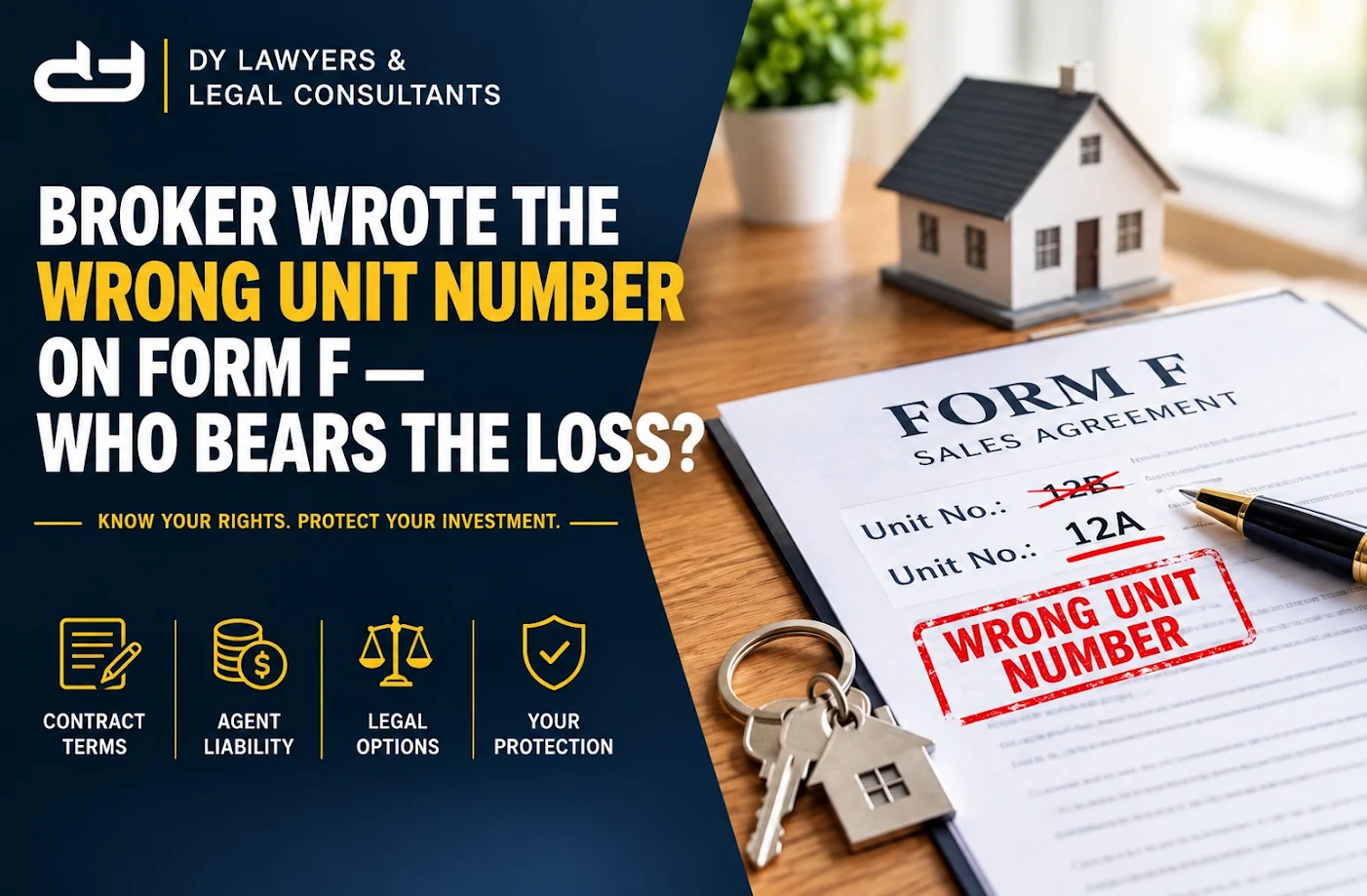
A resale deal in Dubai usually moves quickly once an offer is accepted: the broker pulls up the Trakheesi system, keys in the property details, and generates Form F for signature within minutes. It is precisely that speed that lets a wrong unit number slip through a digit transposed, a neighbouring apartment on the same floor selected from a dropdown, or an old listing reused by mistake. The buyer and seller sign without checking every field against the title deed, and the error is only caught weeks later, sometimes not until the registration trustee rejects the transfer.
The short answer is that nobody is automatically liable, and no outcome is automatic either. A Form F wrong unit number can be a harmless clerical slip that is corrected in minutes, or it can point to a genuine disagreement about which property the parties actually agreed to buy and sell. Which of those it is and who ends up carrying the loss depends on the surrounding facts, the stage at which the error was found, and what each party did once they knew about it.
A Typo, or a Dispute About the Identity of the Property?
The first question is not who made the mistake but whether there was ever a real agreement on the unit involved. Where the buyer viewed unit 1204, negotiated on unit 1204, and every other document the offer, the title deed copy, Form A or Form B, the WhatsApp thread with the agent consistently refers to unit 1204, a stray “1402” on Form F is an obvious clerical error. The parties’ true intention is not in doubt, and the paperwork simply needs to catch up with it.
The position is different where the wrong number actually corresponds to another real, existing unit, a different floor, a different building phase, or a unit owned by someone else entirely. Here the question stops being about correcting a typo and becomes a question about what was actually agreed. Price, floor level, view, and size can differ significantly between two units in the same tower, and a seller or buyer may reasonably say the contract as written does not reflect any agreement they made. Establishing which situation applies requires comparing the title deed and DLD property identifiers against the listing, the viewing record, the offer, any Form A or Form B, and the parties’ subsequent conduct: did they proceed to arrange the NOC and mortgage clearance for the correct unit, or did confusion continue through to the transfer date?
Timing Changes the Analysis
Where the error is caught before signature, it is simply fixed: the broker regenerates Form F with the correct details before either party commits. This is the cheapest and cleanest point to catch a mistake, and it is why buyers and sellers should check the unit number, plot number and title deed reference against their own records before signing, not after.
Where it surfaces after signing but before transfer, the position is more delicate. A signed Form F is a binding contract, and a broker cannot unilaterally rewrite it. Correcting it properly requires the written agreement of both buyer and seller, generally recorded through the same DLD-linked system that produced the original form, so that the registered contract matches what was actually agreed.
If the error comes to light at the registration trustee, the transfer may stall. The completion date can then become contentious, along with any additional costs and the status of the deposit. Anyone dealing with a delayed property transfer in Dubai should document the reason it could not proceed before blaming the other party for failing to complete.
Whose Mistake Is It?
A mistake on Form F rarely has one automatic answer for liability. The broker who prepared the form has a professional duty to record the transaction accurately, and a broking employing that individual can be answerable for its employee’s negligence in the course of their work. But a signature does not simply vanish because a broker made an error, nor does an error automatically make the broker solely responsible: a buyer and seller are also expected to read what they sign, and a party who supplied the incorrect unit details in the first place, often the seller’s own listing information, carries part of the responsibility for the confusion. Establishing Form F legal liability in a given case means asking, concretely, who provided the wrong information, who had the opportunity to catch it, and who benefited from moving quickly rather than checking carefully.
UAE civil law addresses this through general principles that predate and survive the change in codification. Under the Civil Transactions Law, a person who fails to exercise reasonable care in performing an obligation remains liable for fraud or gross negligence, and any fault causing harm to another gives rise to an obligation to make that harm good; an employer can, in turn, answer for the fault of an employee acting within their role. Contracts signed before 1 June 2026 fall to be assessed under Federal Law No. 5 of 1985, while Federal Decree-Law No. 25 of 2025 governs later agreements. The new law preserves the same underlying doctrines of mistake, negligence and defective consent, expressed in modernised form, so the analysis does not change even though the source text does.
Mistake, Voidness, and the Question of True Consent
Where the wrong unit number is a pure clerical slip, and both sides plainly intended the same identifiable property, the contract stands and is corrected by agreement; there is no defect of consent to speak of. Where, by contrast, the error means the parties were never truly agreed on the same subject matter, one thinking they were buying unit 1204, the other believing they were selling unit 1402 the law’s treatment of mistake as a defect of consent becomes relevant, and a party may have grounds to argue that no binding meeting of minds occurred on the essential subject of the sale.
Proving a Loss, Not Just an Error
Identifying who made the mistake and establishing a professional duty is only the first half of any compensation claim. A claimant still has to show an actual, quantifiable loss and a causal link between the error and that loss a delayed or failed transaction, documented additional costs such as re-issued NOC fees or extended mortgage offer charges, or a deposit genuinely put at risk because the failed transfer was blamed, rightly or wrongly, on one side. Neither a deposit, a commission, nor a price difference is automatically recoverable simply because the unit number was wrong; the amount and the party responsible for it depend on the evidence assembled after the event.
Protecting Your Position
Anyone facing this situation should preserve the signed Form F together with earlier drafts and listing material, compare every identifying detail against the title deed, and keep the messages that show which unit was genuinely intended. A written correction should be requested promptly through the broker and recorded formally rather than left as an informal understanding. Any transfer appointment, refusal reason from the registration trustee, and resulting expense should be documented as it happens. An amicable resolution between the parties, or a complaint through the relevant DLD or RERA channel, is usually the sensible first step before anyone alleges default or releases a deposit.
At DY Lawyers and Legal Consultants, we act as a real estate dispute lawyer in Dubai and property dispute lawyer in Dubai for buyers, sellers and brokers caught in Form F errors, deposit disputes and failed transfers, and we work with licensed UAE advocates for representation before the Dubai Courts and relevant regulatory bodies. At DY Lawyers and Legal Consultants, we advise buyers and sellers on Form F errors, failed transfers and deposit claims. If the wrong unit number has put your transaction at risk, speak with a property dispute lawyer in Dubai about the contract, the evidence and your options.
This article is general information on the law as at September 2026 and is not legal advice. The outcome of any dispute depends on the specific contract and the facts involved.
